
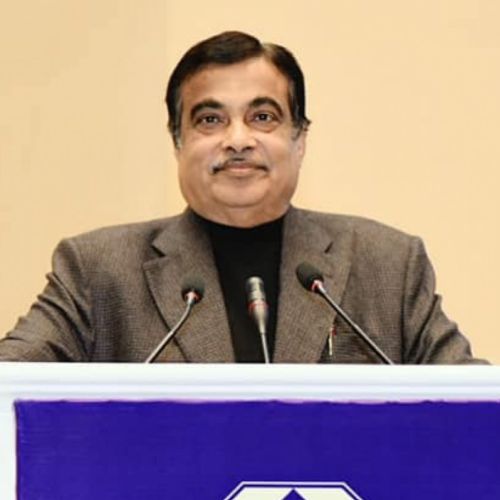
Union Minister Nitin Gadkari travelled in a flex-fuel Toyota vehicle in Delhi that runs entirely on ethanol, highlighting its potential to cut pollution, increase farmers’ income and reduce India’s dependence on imported fossil fuels. He said that wider use of ethanol-based vehicles would help the country gradually move away from petrol imports, reports NDTV Auto.
While riding in the vehicle, Gadkari said it was operating on 100% ethanol and was much cheaper to run than petrol cars. Speaking to reporters, he said the fuel cost was significantly lower. According to him, ethanol costs around ₹65 per litre while petrol costs about ₹120 per litre. He added that the car generates part of its own electricity while running, which further brings down the effective cost of using ethanol. He explained that the overall cost of running such a vehicle could come down to about ₹25 per litre.

Gadkari said that ethanol production directly supports farmers because it is made from agricultural byproducts. He noted that ethanol can be produced from broken rice, corn, sugarcane juice and stubble, and said it does not add to pollution. He stressed that using ethanol would help the country reduce fuel imports and ensure financial benefits for farmers.
The minister also said that ethanol helps lower pollution and reduces the need for imported fossil fuels. He added that it can make vehicles cheaper to maintain in the long run while also improving power and torque. India currently has around 550 ethanol plants, and fuel with 20% ethanol blend is already available in many parts of the country.
Gadkari further said that several major two-wheeler manufacturers have already introduced models that can run entirely on ethanol. He mentioned that a tractor powered by ethanol and CNG will also be launched soon, and that major automobile companies will start producing vehicles with flex engines. At present, Indian Oil operates nearly 400 ethanol dispensing stations.
Separately, Gadkari recently informed Parliament that government-backed studies have found no major performance issues or damage to vehicle parts from the use of petrol blended with 20% ethanol (E20). In a written response, he also said the government has no plan to set up a compensation fund for damages related to E20, despite concerns raised by some vehicle owners.
His statement came after MP Derek O’Brien sought detailed information on complaints linked to E20, including claims of engine problems, reduced mileage, denial of warranty and insurance issues. He also asked whether such cases were recorded by manufacturer and insurer, and whether the government intended to create a compensation mechanism.