
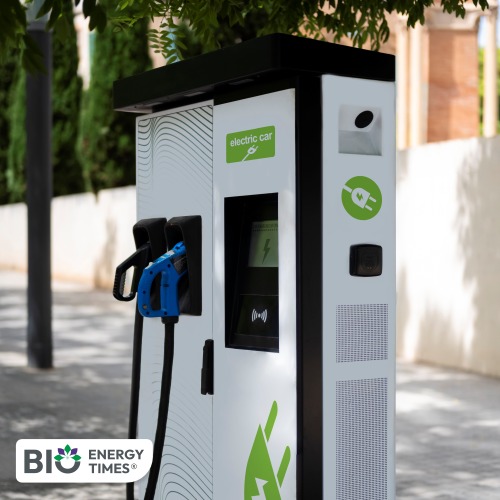
New Delhi: A global energy crisis linked to the West Asia conflict is expected to speed up the shift to electric vehicles (EVs) in India and give fresh momentum to the government’s plan to increase ethanol blending in petrol, industry executives and analysts said.
With crude oil prices rising since the conflict began last month, EV makers such as Vietnam’s VinFast and India’s Ola Electric have rolled out discounts to attract buyers away from petrol and diesel vehicles. Analysts say the situation could push many undecided consumers to opt for electric options.

The developments have also brought renewed attention to the Centre’s plan to go beyond the current 20% ethanol blending in petrol. Industry officials believe higher blending levels and the rollout of flex-fuel vehicles could be fast-tracked, helping India cut its dependence on imported crude oil.
According to analysts at Nomura, higher oil prices could improve the overall cost advantage of EVs, leading to a rise in sales in the short term. They noted that rising fuel costs may shift consumer preference more quickly towards electric vehicles.
While retail fuel prices have not increased yet, experts say the risk of a hike remains if the conflict continues.
EV sales in India grew 77% in 2025 to around 177,000 units, with their share in total vehicle sales reaching 4%. Although EVs attract a lower GST of 5%, they are generally more expensive than conventional vehicles. A recent reduction in GST on petrol and diesel vehicles has widened the price gap, but analysts believe the ongoing energy situation could still encourage more buyers to switch.
Industry executives say the crisis highlights the need to diversify fuel sources. Deepak Ballani, director general of the Indian Sugar and Bio-energy Manufacturers Association, said the government is likely to step up efforts to raise ethanol blending once the situation stabilises.
He added that a gradual increase to higher blends such as E22 and E27 could reduce import dependence further. Work on flex-fuel vehicles, which can run on varying levels of ethanol, including 100%, is also expected to pick up once there is more clarity on policy.
India launched its ethanol blending programme in 2003 to use surplus sugarcane-based raw material and reduce crude oil imports.
A spokesperson for Maruti Suzuki said the current situation underlines the importance of energy security. While electric vehicles will play a role, many vehicles will continue to rely on conventional fuels. The spokesperson said increasing the use of biofuels, hybrid vehicles, and smaller, lighter cars could quickly help reduce fuel use.
Several major automobile and two-wheeler companies, including Hyundai Motor India, Tata Motors Passenger Vehicles, Mahindra and Mahindra, Bajaj Auto, Hero MotoCorp, TVS Motor Company, Honda, and Ather Energy, did not respond to queries.
India imported 234 million tonnes of crude oil worth $137 billion in FY25, according to official data. Over the past 11 years, ethanol blending has helped save about ₹1.44 trillion in foreign exchange and replaced 24.5 million tonnes of crude oil, as per industry estimates.
At present, no carmaker in India offers flex-fuel vehicles. Higher ethanol blending has also faced resistance from some consumers due to concerns over lower fuel efficiency.
Experts say EVs are likely to gain the most in the near term, as more models are already available in the market, unlike flex-fuel vehicles and higher ethanol blends, which are still in early stages.
“Many undecided buyers are now choosing EVs. No other clean fuel option is seeing a similar trend,” said Subhabrata Sengupta of Avalon Consulting.
Companies are already moving to tap into this shift. VinFast recently launched a programme allowing customers to exchange petrol or diesel vehicles for EVs with added discounts. Soon after, Ola Electric introduced its “EndICEAge” campaign, offering incentives to encourage consumers to switch to electric mobility.