

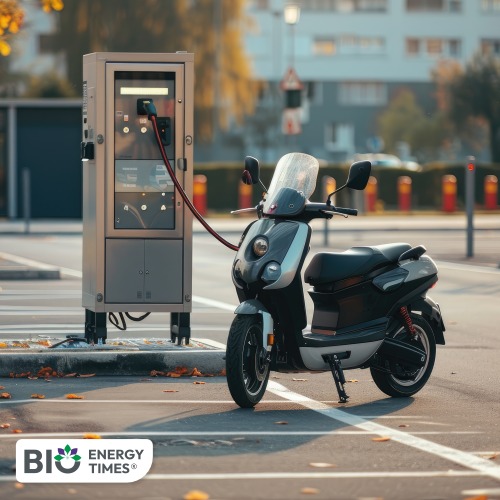
New Delhi: The Delhi Government is planning to mandate vehicle manufacturers to set up at least one public electric vehicle charging station at each dealership, as part of its upcoming EV policy aimed at accelerating the shift to electric mobility in the national capital.
The proposed policy, likely to be announced during the Budget session on March 24, will remain in force until March 31, 2030, unless extended or revised. Officials said the move is intended to strengthen the city’s charging infrastructure, which currently falls short of growing demand.

According to officials, around 400 vehicle dealers operate in Delhi, and manufacturers may be required to install charging stations across their showrooms. The government has set a target of achieving 30 per cent electric vehicle adoption by 2030.
The policy also calls on manufacturers to ensure a steady supply of electric vehicles across segments and work towards stabilising prices to make them more affordable for consumers.
In addition, the Transport Department plans to electrify nearly 80 bus depots under the Delhi Transport Corporation to support charging for buses as well as other vehicles. The government is also considering incentives for two-wheeler purchases in the initial years of the policy.
Officials said that from next year, only electric autos will be registered in the city, and from 2028 onwards, registrations will be limited to electric two-wheelers.
Vehicular emissions account for about 23 per cent of Delhi’s air pollution, with two-wheelers making up nearly 67 per cent of total vehicles. The policy aims to address this by speeding up the transition to electric vehicles.
Data shared by officials shows that Delhi registered over 8.17 lakh vehicles last year, of which about 1.21 lakh were electric, taking the share of EVs in new registrations to 14.9 per cent. This is significantly higher than the national average of around 8 per cent.
Despite having over 5,800 charging stations, the city is estimated to require around 30,000 to meet future demand. Power distribution company BSES has already installed more than 6,200 charging points across 3,200 locations.
The Central Electricity Authority reported that Delhi accounts for over 24 per cent of the country’s public EV charging electricity consumption.
Officials said Delhi Transco Limited will act as the nodal agency to assess demand, identify locations and ensure power supply readiness. EV charging demand in areas served by BSES has already seen a sharp rise and is expected to grow further in the coming years as adoption increases.