
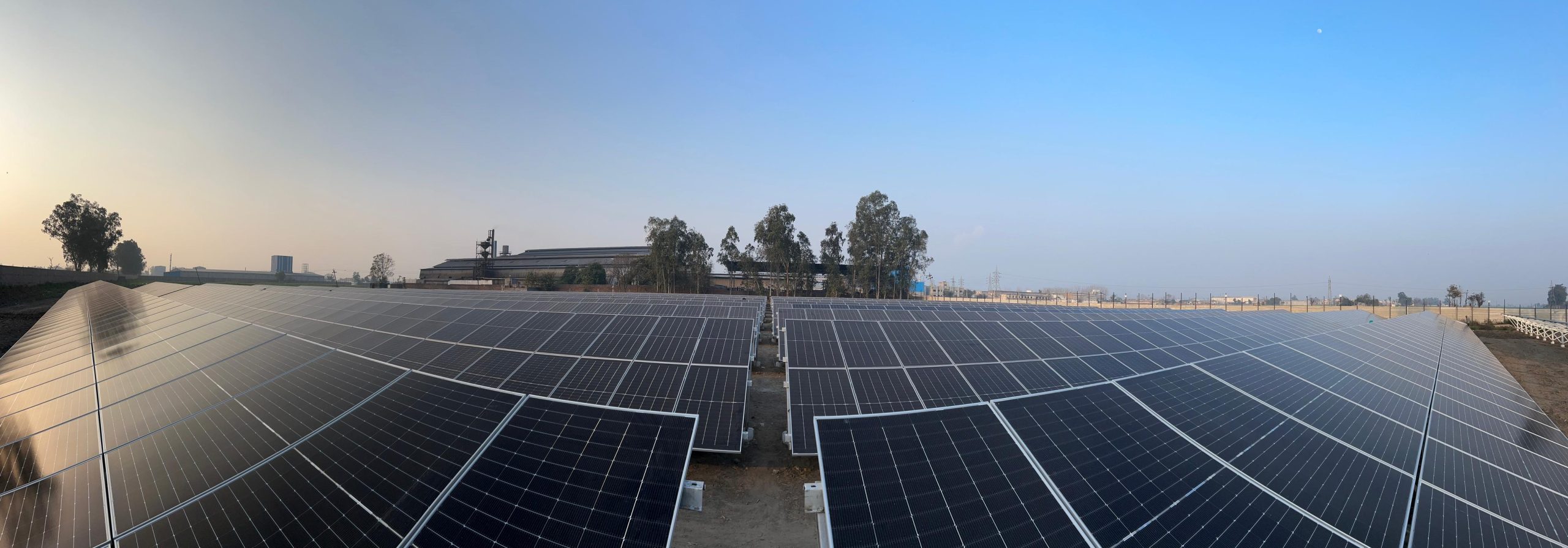
By 2030, India anticipates that commercial and industrial (C&I) developers will contribute nearly 60–80 GW of renewable energy (RE), signaling a significant shift in the country’s clean energy growth, said Santosh Kumar Sarangi, Secretary of the Ministry of New and Renewable Energy (MNRE), on Thursday.
Addressing the India Edge Event organized by the CII, Sarangi stated, “The trend of RE deployment through C&I installations is visible. By 2030, we estimate that around 60–80 GW of renewable energy will come from C&I developers.”

He emphasized that developers in this segment will play a crucial role in meeting India’s clean energy targets by 2030. Sarangi also noted the growing adoption of rooftop solar panels across several regions, a trend expected to continue in the coming years.
Highlighting state-level progress, he cited Madhya Pradesh and Gujarat as leading examples. “Madhya Pradesh is one of the progressive states in terms of renewable energy,” he said, adding that many states are now issuing tenders aligned with their specific energy needs. He observed that a clear pattern is emerging, with states increasingly pursuing renewable solutions tailored to their requirements.
Sarangi added that renewable energy growth in India is accelerating and will continue to do so. As electricity demand rises rapidly, the demand for renewable power will also increase. He noted that as states issue more tenders, their contribution to this energy transition will become increasingly significant.
Acknowledging existing challenges, he highlighted the need to address issues related to integrating renewable energy into the grid. “Immediate attention is required to solve these challenges,” he said, adding that deploying battery systems within the transmission network and expanding storage capacity will be essential.
On energy security, Sarangi stressed the importance of robust supply chains alongside storage expansion. He encouraged Indian companies to leverage benefits under the Production-Linked Incentive (PLI) scheme to further strengthen the sector, noting that India’s solar module manufacturing capacity has reached nearly 140 GW.
He also discussed rising costs in grey ammonia, which have increased from USD 450 to USD 550 partly due to the depreciation of the rupee. He said the government is encouraging several ports to establish bunkering facilities funded through the Green Hydrogen Mission, steps aimed at developing India’s green hydrogen ecosystem.
Finally, Sarangi highlighted MNRE’s close coordination with the Central Transmission Utility, Central Electricity Authority, Ministry of Power, and the power regulator. He noted that the ministry engages actively with industry, holding monthly meetings with solar, wind, and other sector stakeholders to facilitate smooth renewable energy production.