

India has crossed a major clean-energy milestone, achieving 50% of its installed electricity capacity from non-fossil fuel sources—five years ahead of the deadline set under its Nationally Determined Contributions (NDCs) to the Paris Agreement. As of 31 October 2025, non-fossil capacity stands at approximately 259 GW, with 31.2 GW added in the current financial year alone.
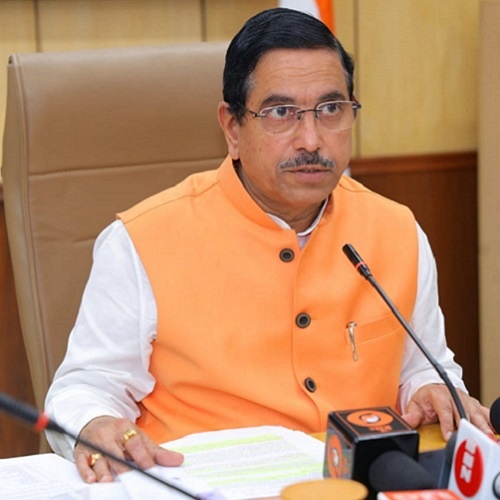
The update was presented in the Rajya Sabha today by Union Minister of New and Renewable Energy Pralhad Joshi, who outlined the country’s ongoing transition to a more flexible, storage-based renewable energy ecosystem.

Strong Momentum in Renewable Tendering
Between April 2023 and October 2025, Renewable Energy Implementing Agencies (REIAs)—including SECI, NTPC, NHPC and SJVN—issued Letters of Award (LoAs) totaling 67,554 MW, with no cancellations reported after issuance. States are also driving renewable expansion through their own tendering processes, while commercial and industrial consumers continue to add capacity via green open access and captive projects.
Officials noted that this multi-track approach is accelerating renewable deployment beyond the REIA-led bids alone.
Shift Toward Storage-Backed Renewable Power
Declining costs for solar-plus-storage and other forms of dispatchable renewable power are reshaping procurement strategies. Distribution companies are increasingly favoring firm, storage-integrated energy over standalone solar or even solar-wind hybrids, particularly to meet peak-hour demand.
In response, the government has asked REIAs to pivot away from plain solar tenders and issue bids focused on:
Solar with energy storage,
Peak-hour renewable power supply, and
Firm and Dispatchable Renewable Energy (FDRE).
Strengthening Policy Support and PPA Execution
To accelerate the signing of power purchase agreements (PPAs), the Centre has urged States to comply with Renewable Consumption Obligations under the Energy Conservation Act. REIAs have also been advised to aggregate demand from DISCOMs and other consumers before tendering. Regional workshops with major renewable-power-procuring States are addressing bottlenecks and improving coordination.
Expanding Transmission Infrastructure
The Central Electricity Authority (CEA) continues to develop transmission plans aligned with renewable-energy potential identified by MNRE. The grid is being expanded in phases to match generation growth and prevent over- or under-utilisation of assets.
A significant 47.2 GW of Battery Energy Storage System (BESS) capacity has been factored into transmission planning up to 2032. BESS is expected to facilitate peak shifting, decongest networks, and enhance transmission utilisation.
Under the CERC Connectivity and General Network Access (Third Amendment) Regulations, 2025, project developers will now receive grid connectivity differentiated by solar and non-solar hours, enabling smoother integration of renewables with co-located storage—without requiring major new transmission lines.